
Your Ultimate Guide to Roof Repairs.
For facility managers, the roof is often out of sight, out of mind, until a problem disrupts operations. But roofing failures don’t just cause leaks. They can shut down production, damage inventory, create safety hazards and quickly blow maintenance budgets.
This guide breaks down everything facility managers need to know about commercial roof repairs: how to spot issues early, when to repair vs. replace and how to build a strategy that protects your roof.
Why Roof Repairs Matter More Than You Think
Your commercial roof is part of your building’s critical infrastructure. When it fails, the impact goes beyond water intrusion.
Unaddressed issues can lead to:
- - Interior damage to ceilings, walls and insulation
- - Mold growth and indoor air quality concerns
- - Safety risks for employees and customers
- - Equipment damage, especially to electrical systems
- - Higher long-term repair and replacement costs
For facility managers who are responsible for operations, compliance and budget control, preventative maintenance is critical.
Common Commercial Roof Problems Facility Managers Face
Understanding the most common roofing issues helps you respond faster and prevent minor damage from becoming a major disruption to your facility.
- Roof Leaks
Leaks are often the first sign of trouble, but the source of a leak isn’t always obvious. Water can travel throughout the building, making professional inspections essential.
- Ponding Water
Standing water on a flat commercial roof accelerates membrane deterioration and increases the risk of leaks or damage to your roof assembly.
- Flashing Failures
Flashing around penetrations, HVAC units and roof edges is one of the most common failure points on commercial roofs.
- Membrane Damage
Punctures, cracks and seam failures are common on aging roofs or roofs that have had major weather events.
Wind, hail, snow, ice and sun exposure all contribute to wear and unexpected damage, especially following a severe weather event.
What to Expect During a Professional Roof Repair
Working with a professional commercial roofing contractor is a smooth, well-coordinated process that minimizes disruption.
A typical repair process includes:
- - A detailed inspection with a written report and recommendations
- - Safety planning and site coordination
- - Professional repairs using compatible materials
- - Before and after photos along with a service summary
Facility managers should expect transparency, clear communication and documentation that supports their roofing decisions.
Repair vs. Replacement: How Facility Managers Should Decide
One of the most common questions facility managers face is whether a roof needs a repair or a full replacement.
Repairs are typically the right choice when:
- - Damage is localized
- - The roof is relatively young
- - The underlying insulation and decking are still in good condition
- - Leaks are recent and limited
Replacement may be necessary when:
- The roof is nearing the end of its useful life
- - Moisture is trapped deep within the roof system
- - Repairs are becoming frequent and costly
- - Structural components are compromised
A professional inspection, including a thermal scan, can provide the data needed to make a confident decision.
The Role of Proactive Planning in Roofing
Start your proactive planning with our Asset Alert Program. Your facility will receive a detailed report that assigns each section of your roof a grade of A, B, C or D. This helps you determine immediate repair needs, preventative maintenance needs and current or future replacements. Understanding your roof’s condition and remaining life expectancy helps you properly prepare your operating expenses and a 5-year budget.
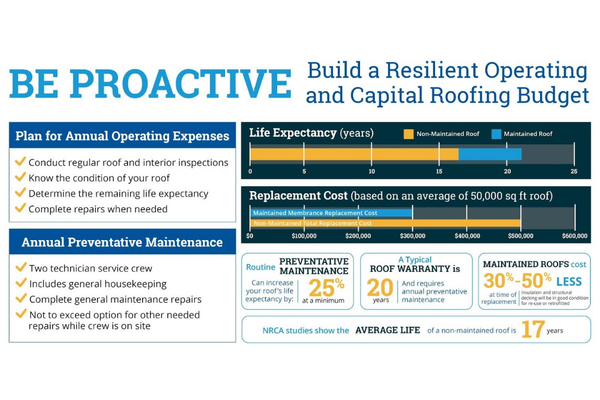
The most effective roofing strategy isn’t reactive, but proactive. A structured preventative maintenance program helps facility managers identify issues early, extend the life of their roof, improve budget predictions and maintain warranty compliance. Routine inspections, especially after storms and seasonal changes are a key part of keeping repair costs manageable.
Safety Considerations Facility Managers Can’t Ignore
Roof safety is a growing concern across commercial facilities. Repairs often require technicians to access rooftops regularly, increasing liability risk. Facility managers should consider permanent safety accessories like walk pads, guard rails or safety striping. Investing in roof safety protects workers and reduces risk for your organization.
Choosing the Right Partner for Roof Repairs
When roofing issues arise, facility managers don’t just need a contractor, they need a reliable partner who understands how critical speed, safety and long-term performance are to daily operations. That’s where working with an experienced commercial roofing contractor makes all the difference!
Our team at CentiMark takes a comprehensive approach, identifying the root cause while assessing the condition of the entire roof and recommending repairs that prevent future failures. This means fewer disruptions, emergencies and more predictable maintenance costs for your facility.
Stay Informed
When you subscribe to the blog, we will send you an e-mail when there are new updates on the site so you wouldn't miss them.